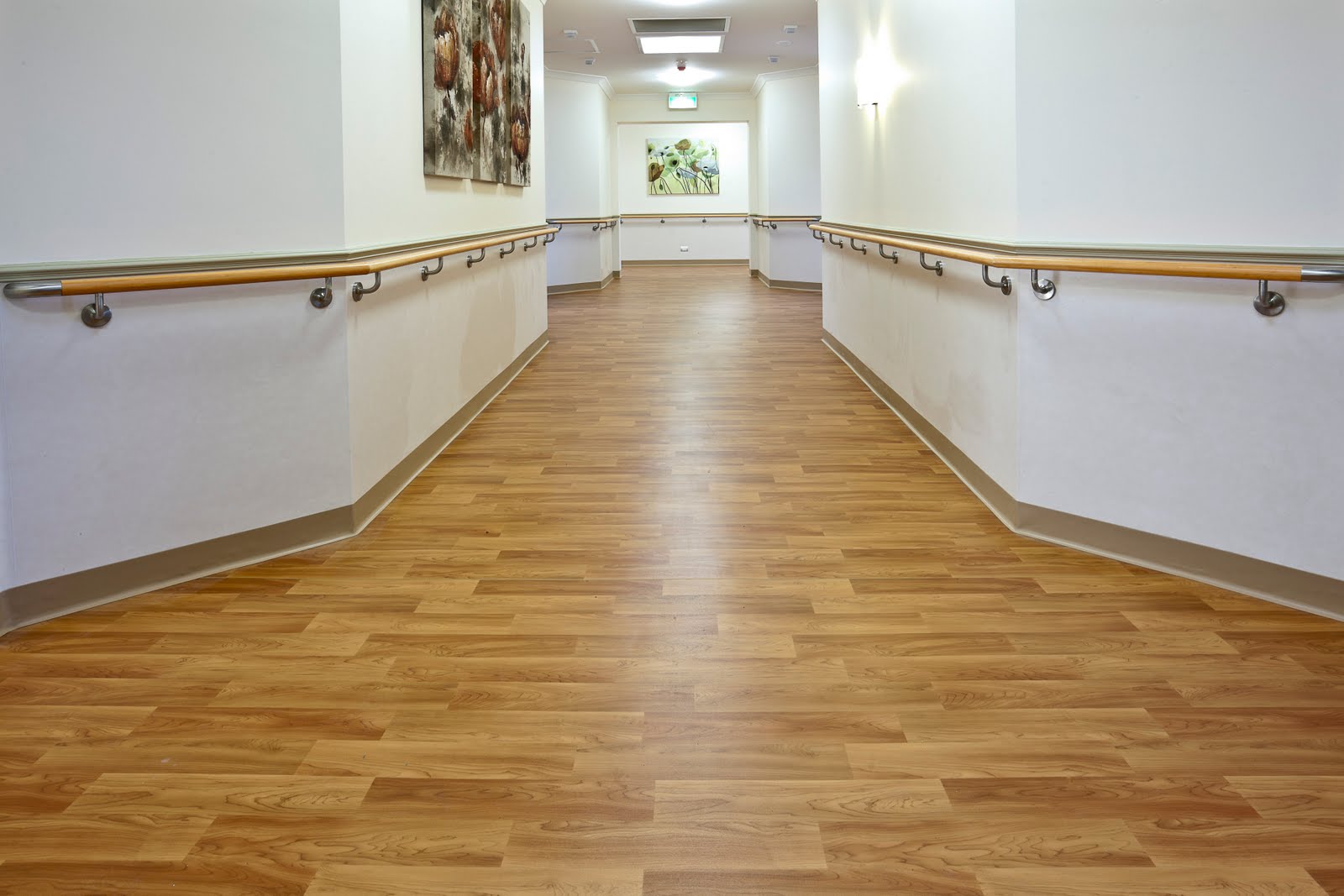
Vinyl floors are a popular option among homeowners, particularly in kitchen and bathroom applications. A synthetic cousin of linoleum, vinyl flooring is water-and stain-resistant, versatile, and provides good durability for the cost. Thanks to a number of advances over the years, today’s vinyl floors are attractive and economical.
Types of Vinyl Flooring
There are two types of vinyl flooring: sheet flooring, in which the flooring material is laid down in sheets 6 or 12 feet wide, and tile flooring, which uses tiles of 9″x9″ or 12″x12″. While sheet flooring is more water resistant and is easier to install, many homeowners prefer vinyl tile, which replicates the look of a ceramic tile floor at a more affordable cost.
Vinyl Tiles
A vinyl tile floor is often installed in commercial settings where high traffic is a constant, or where a clean or static-free environment is desired. It can also be a versatile and cost effective choice for any household. In the home, vinyl tile flooring is often used where a significant amount of moisture is expected. It is also frequently used in remodels to replace higher maintenance flooring, like carpet.
The makeup of a vinyl tile floor is made in one of two ways. Inlay vinyl tile has multiple layers of the same colored vinyl that are fused together. With inlay tile, the color or pattern goes all the way through to the backing. This is a plus because the color will be the same, even if a layer or two wears away.
“Rotogravure” vinyl tile floors are less expensive than inlaid floors. The tiles in this type of floor have a thin layer of vinyl on top that is colored with vinyl paint and covered with a protective coating. Over time or under extreme amounts of traffic, the layer of vinyl can wear through and the color will be compromised.
Advantages and Disadvantages of Vinyl Floors
Vinyl flooring is durable and stands up well to heavy foot traffic. It is comfortable under foot and reduces noise, which can be important for owners with kids or pets. It is also less expensive than many other flooring options and is easy to install and maintain. Vinyl flooring comes in a broad range of colors and patterns to match every decor, including a variety of lifelike wood grains.
On the other hand, vinyl floors do not stand up well to heavy loads and can be damaged by sharp objects. Also, colors can fade with exposure to too much direct sunlight and floors can be damaged by extreme temperatures. For that reason, vinyl is not recommended for outdoor or indoor/outdoor uses.
What to Know About Installation
The key to successful installation of vinyl flooring lies beneath the flooring itself. Vinyl tiles require an extremely smooth surface, because any flaws and imperfections will show through as bumps and indentations in your floor. Usually the best subfloor is a layer of well-sanded plywood.
Most manufacturers do not recommend laying new vinyl over more than one layer of existing vinyl, and in fact will not guarantee the flooring if there is more than one layer of vinyl beneath. Another problem with laying over existing vinyl is that if the lower layer is patterned, the texture will eventually show through your top layer.
Vinyl flooring can be laid on top of concrete, but again, uniformity and smoothness can be a problem. Also, a plywood layer will give you a better feel under foot.
Some manufacturers offer do-it-yourself installation kits, but many homeowners choose to use a contractor in order to achieve a smooth, professional look.
 Insulating a Wood Floor
  Cypress and Hickory Wood Flooring
  How to Hide Pesky Carpet Seams
  Divine Pine Flooring
 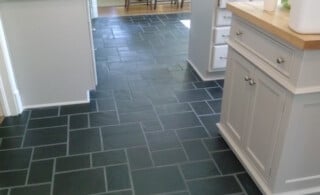 Slate Floors Make for a Great Decor

Are You Familiar With This Topic? Share Your Experience.