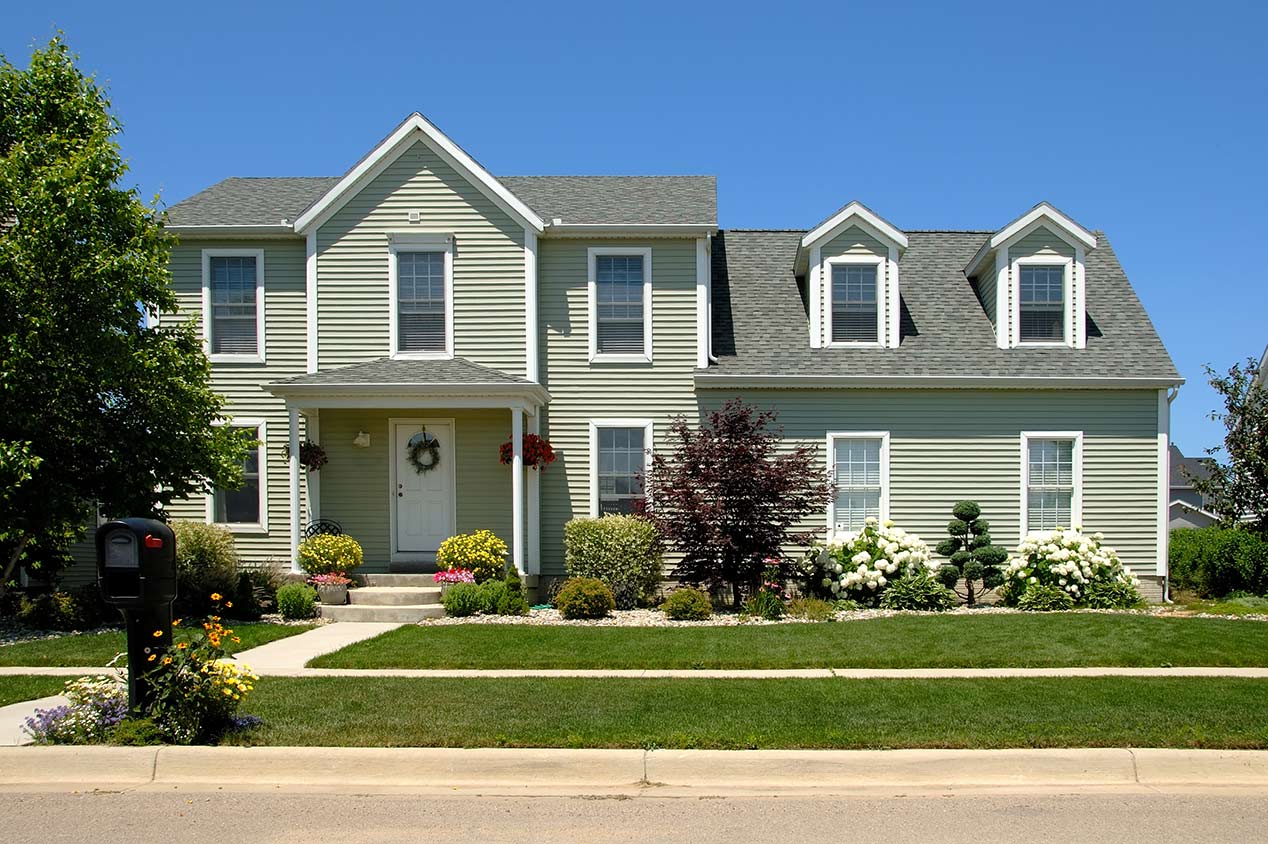
 Anne Kitzman – stock.adobe.com
Your home’s siding influences curb appeal and resale value, and it can help or hinder when it comes to avoiding moisture and insect problems. The type of siding material you choose depends largely on what kind of climate you live in, as well as the style and age of your house.
Learn more about seven of the most popular siding types, from brick and wood to aluminum.
On This Page:
- How to Choose the Right Siding for Your Home
- Popular Types of Siding
- Vinyl Siding
- Wood Siding
- Composite Wood Siding
- Stucco Siding
- Stone Veneer Siding
- Fiber Cement Siding
- Aluminum Siding
- FAQs
How to Choose the Right Siding for Your Home
Choosing the right siding not only improves your home’s appearance, but also its resale value. Here’s what you should consider when choosing the best siding for your property.
- Breathability: In moisture-prone areas, waterproof siding is a good choice. In more moderate climates, breathable siding is preferential.
- Installation: Ease of installation impacts total project cost.
- R-Value: R-Value (resistance to heat flow) indicates how energy-efficient a siding material is.
- Appearance: Your siding is the first impression visitors get, so how it looks matters. Siding impacts curb appeal and resale value.
- Durability: Consider how durable siding is and whether it can withstand temperature shifts and the weather extremes in your area.
Popular Types of Siding
There are plenty of options for siding, but to choose the right one, you need to know the properties of each and which ones are best for where you live.
Vinyl Siding
Vinyl siding is a popular option because it doesn’t flake, rot, or buckle thanks to its strong plastic resin construction.
Pros:
- It isn’t impacted by weather, moisture, heat, or humidity
- Doesn’t attract termites or other pests
- Inexpensive
- 40-year lifespan
- Can mimic the look of real wood or stone veneer
- Insulated vinyl has a better R-Value of 2.0–3.5, but costs more
Cons:
- Not an effective insulator; R-Value of only 0.61
- Will crack and split if hit hard
- Not repairable. If damage occurs, a whole board needs replacing
Cost to install vinyl siding: $3 to $12 per square foot.
Wood Siding
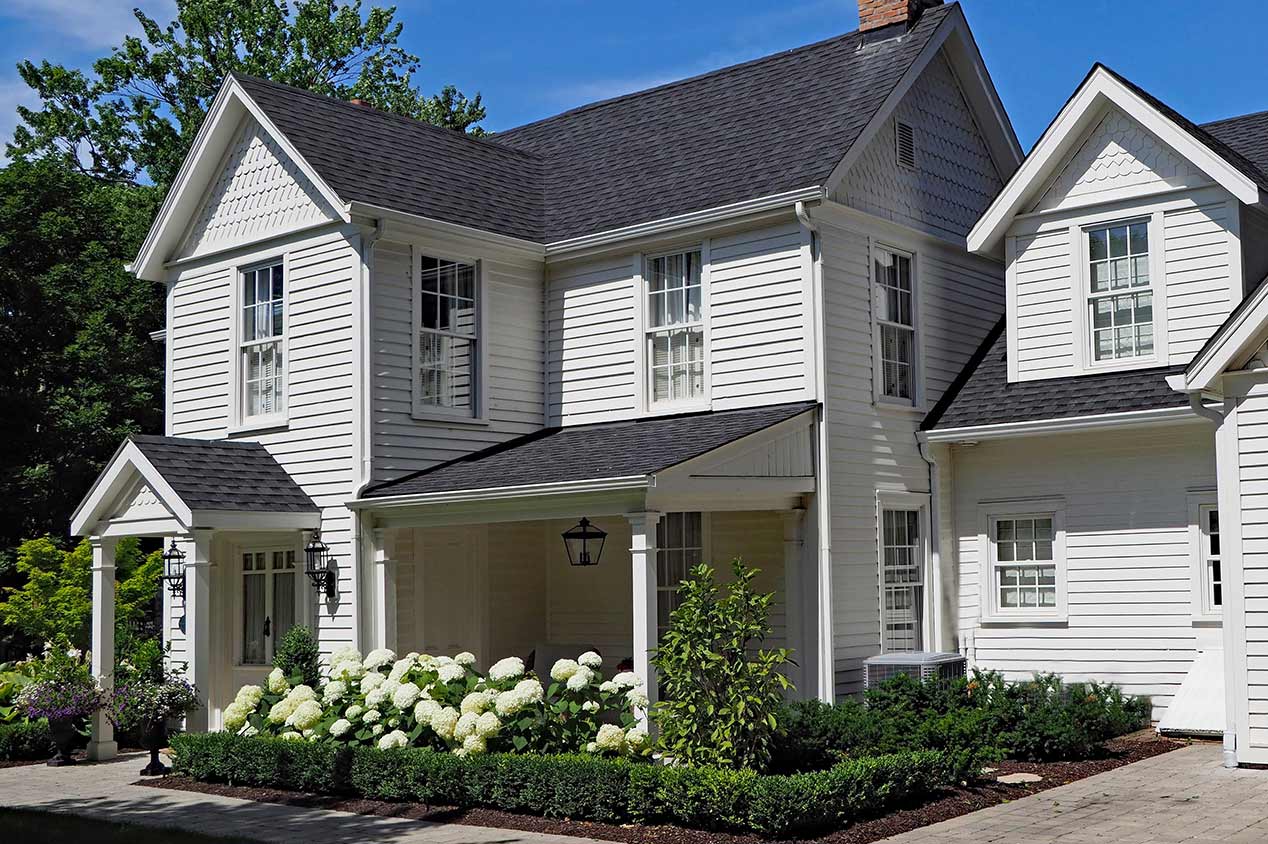 Spiroview Inc. – stock.adobe.com
Considered to be one of the best siding materials for houses, wood siding has a traditional look and feel that’s prized by many homeowners. There are many different species of wood siding to choose from. Below are the pros and cons of wood siding, in general.
Pros:
- Easy to paint
- Eco-friendly, if sustainably sourced
- Easy to repair
- Inexpensive
- 40-year lifespan
- Aesthetic appeal
Cons:
- Requires more maintenance than synthetic sidings
- Requires repainting or staining every 3–7 years
- Can attract pests like termites and rodents
Cost to install wood siding: $3 to $10 per square foot.
Composite Wood
Composite wood siding combines wood fibers and resin to create wood-look siding that has the best features of both wood and resin.
Pros:
- Low maintenance
- Diverts waste wood fibers from landfill
- Highly durable
- Requires no painting
- Practically indistinguishable from real wood
- Withstands weather and temperature fluctuations
- 50-year lifespan
Cons:
- Not real wood
- High moisture content that can lead to mold
- Can warp in humid conditions
Cost of composite wood siding: $4 to $6.50 per square foot.
Ready to start your siding project?
Find ProsTraditional Stucco
Traditional stucco is a popular choice for its low cost and low rate of water absorption.
Pros:
- Low-maintenance
- Cures quickly
- Easy to repair
- Easy to install
- Absorbs very little water
- Inexpensive
Cons:
- Heavy: weighs up to 10 pounds per sq. ft
- May crack over time
- Can buckle in extreme heat
Cost to install traditional stucco siding: $7 to $9 per square foot.
Stone Veneer
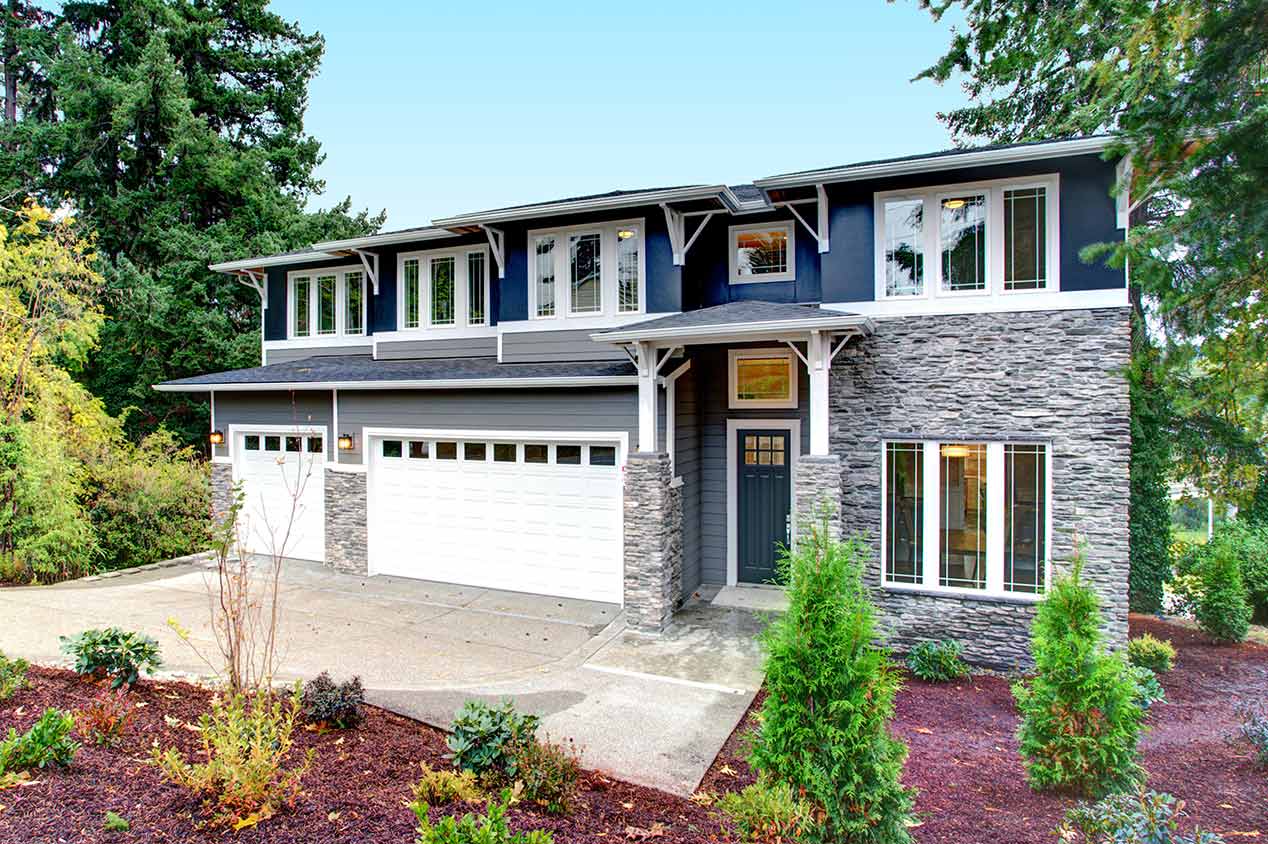 Javani LLC – stock.adobe.com
Stone veneer gives homeowners the beauty and timeless look of real stone, without the high price tag.
Pros:
- Maintenance-free
- Can withstand weather extremes
- Can withstand temperature fluctuations
- Fire-resistant
- 75-year lifespan
- Less expensive than stone
Cons:
- Water can get trapped inside if the siding is not installed correctly
- More expensive than many other materials
Cost to install stone veneer siding: $6 to $15 per square foot.
Fiber Cement
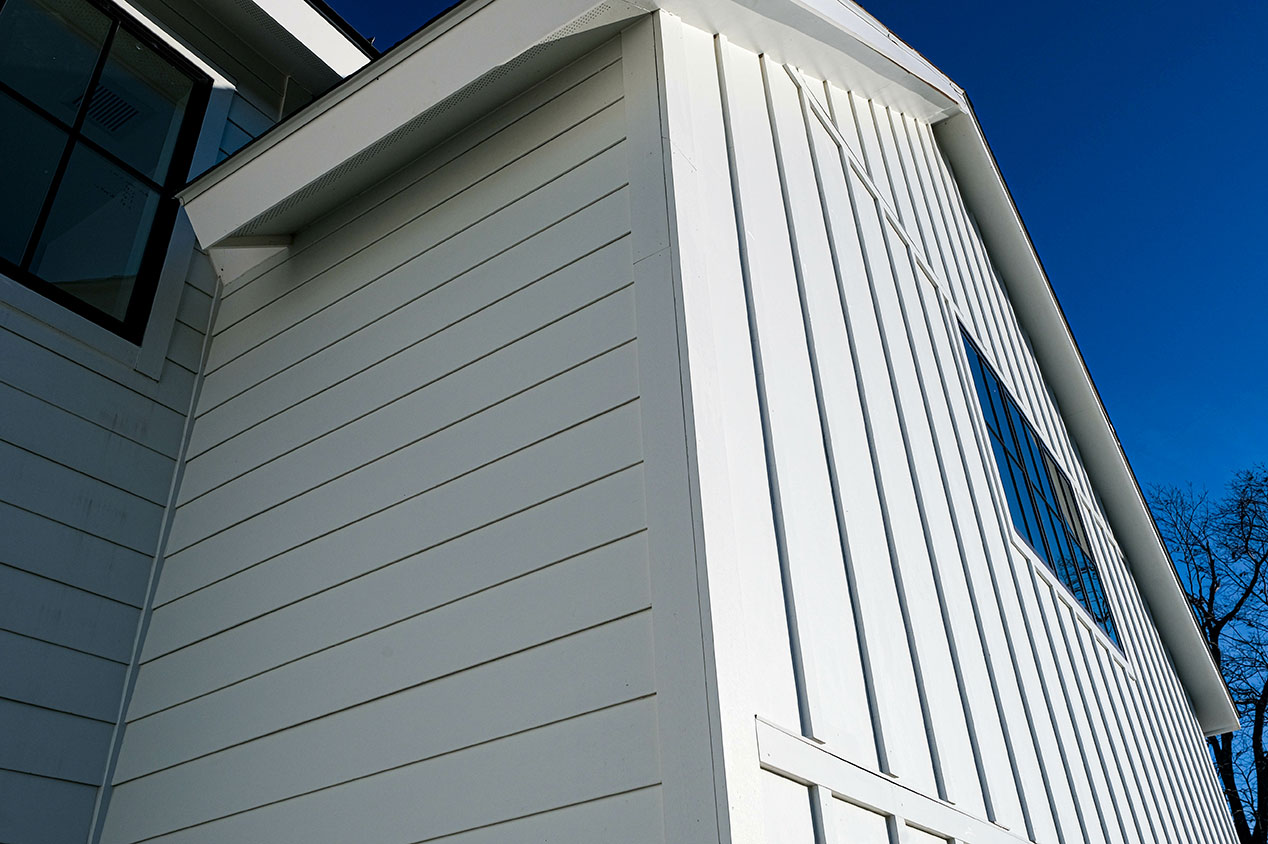 Robert – stock.adobe.com
Fiber cement siding, often dubbed Hardie board siding, is popular because of its durability and versatility.
Pros:
- Durable
- Can withstand temperature extremes
- Can mimic stone or wood
- Made of natural materials and production practices are sustainable
- 50-year lifespan
Cons:
- High-cost installation because of job complexity
- Some maintenance required
- Eventually requires repainting
Cost to install fiber cement siding: $5 to $25 per square foot.
Aluminum
Aluminum siding is popular with those in extremely cold climates or in areas of persistent insect problems because it’s impervious to both.
Pros:
- Can mimic the look of wood or stone
- Lightweight
- Easy to install
- Moderately priced
- Does not rot, warp or grow mold
- Impervious to water damage
- Impervious to insects
- Does not rust
- Withstands temperature extremes and bad weather
- Fire resistant
- Insulated heavy-gauge aluminum siding has an R-Value of 2.0-5.0
- 35-year lifespan
Cons:
- Dents easily
- Difficult to match colors if you need to install a new board
- Gets a chalky, dull look over time and needs repainting
- Makes loud “pinging” noises in high winds or hot temperatures
Cost to install aluminum siding: $5 to $11 per square foot.
FAQs
What is the easiest siding to install yourself?
Vinyl siding is one of the easiest sidings to install yourself. However, if you don’t install it properly, you’re setting yourself up for a lot of expenses further down the line in the form of repairs and remediation of mold, moisture problems, and possibly foundation damage. While it’s possible to do a DIY installation, it’s better to hire a local siding installer.
Does vinyl siding help insulate a house?
Yes, to a degree. Regular vinyl siding has a low R-value of 0.61, but insulated vinyl has a rating of up to 3.5. And you can further insulate your house by having a thermal house wrap added before the new siding.
Does replacing siding increase home value?
Yes, replacing siding increases your home value by up to 76.7% of the total project cost, giving you a decent ROI. If you choose one with a good R-value or have a wrap applied as part of the installation, you’ll reduce your energy costs, too.
 Checklist: Disability Remodel
  The Slowest (and Quickest) Home Improvements
  4 Master Bathroom Remodeling Options
  Masonite Siding: A Strong Alternative
  Planning for a Home Addition

What to use to seal seams of hardy plank and what primer and paint to use.
For the seams i used the same hardie wrap I just cut it depending on the size of the hardie plank for example if a 8-1/4 i cut a 10 inch roll
Kills primer works fine