Brick is one of the most common choices for basic masonry materials. It’s made of fired clay and it comes in hundreds of different colors. It can be one of the higher-priced exterior finishes, but many homeowners like it because it’s water repellant, easy to maintain, and less expensive in the long run. Brick masonry should last 100 years, with the first 25 years free of maintenance.
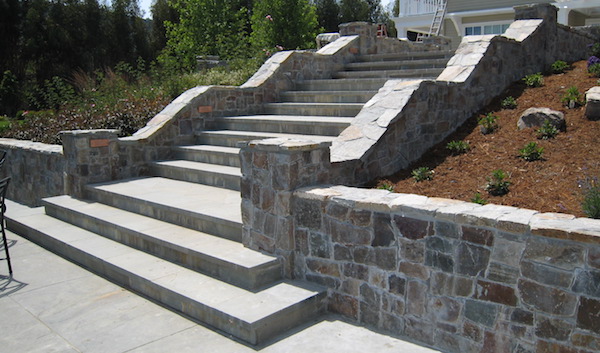
Stone is an ancient form of masonry. In theory, stone will last a lifetime. Stone exteriors work best when installed with old-fashioned techniques. Problems can occur when mixing stone masonry with new building techniques. For example, many homeowners want the look of stone without paying the cost to get a properly built stone exterior. They choose to go with stone veneer over a modern stud frame. This will likely fail over time.
Concrete block masonry is more common with industrial buildings. It should last 50 to 80 years, and you’ll need to fix the joints after 25 years. Unlike brick, concrete blocks are not waterproof. You’ll need to apply a water seal every 10 years. The best water seals are silane and siloxane. You can apply them by spray, and they soak into the surface of the wall like stain.
Water and Repairing Masonry
Water is masonry’s worst enemy because freeze-thaw cycles can cause cracks. Properly sealed stone masonry prevents problems. Discoloration is caused by water penetration or is an indication that water is entering but evaporating. Every year, check your building’s masonry exterior four hours after a heavy rainstorm. Any dark patches on the wall means that water soaked into the surface. This is a future problem that needs fixing. Leaching water is moisture that slowly finds its way through the masonry wall via cracks, holes and mortar joints, usually because of improper or deteriorating waterproofing.
Ready to start your masonry repair?
Find ProsMasonry Repair and Maintenance
The most common masonry repair is repointing. Repointing involves replacing damaged or deteriorated mortar between the brick, stone, or concrete. Often, home improvement repair projects entail some sort of upgrade over older materials. With repointing, though, it’s critical that you replace old mortar with equivalent strength, composition, and appearance. This will keep your masonry uniform and will keep the base materials from cracking. If you replace the old mortar with a stronger mixture, your masonry won’t be able to breathe with the natural freeze and thaw cycles.
You may also want to have your masonry cleaned periodically to maintain its new look. Be cautious, though, it’s easy to damage your masonry with improper cleaning methods. A low pressure water wash and a mild detergent is usually the way to go, but always test a small area first, before letting your entire masonry have it. Use the gentlest means possible, and if you’re at all uncertain it’s probably best to call a masonry repair contractor.
Ready to start your masonry repair?
Find ProsOther Common Problems in Repair Masonry
- Bulges in concrete come from excessive pressure on the back side of a wall.
- Concrete cracks happen because of horizontal or vertical stress to a masonry surface. (This is why rebar is used to strengthen concrete.)
- Deteriorating mortar joints are generally due to age or water penetration.
- Leaning walls are usually due to the lack of sufficient footing (additional concrete added to the bottom of a wall to strengthen it) or to more horizontal pressure at the top of the wall than the bottom.
- Brick, stone, or blocks come apart from age and deterioration of mortar between masonry units.
- Sinking or settling in masonry is due to improper compaction of soil beneath the masonry or improper drainage around masonry.
 Brick Veneer Siding
  Masonry Options – Brick, Stone, and More
  How to Find & Hire a Masonry Contractor
  Stone and Gravel Driveways
  The Importance of Chimney Repair

Are You Familiar With This Topic? Share Your Experience.