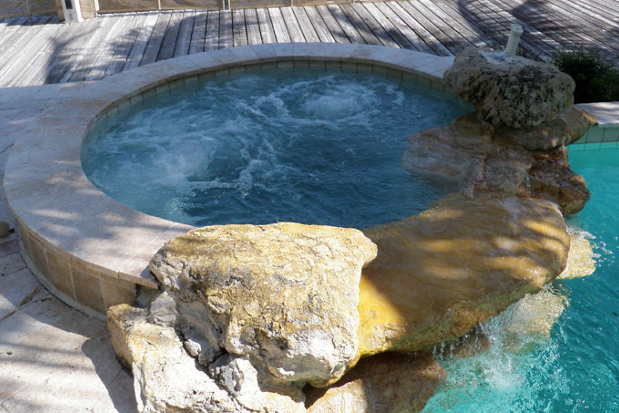
 Comfortable molded plastic hot tubs or spas now come in soft hues that accommodate any climate and decor, replacing the old wooden models of the 1960s. Hot tubs, which require adequate support and access to electrical power, now have bubbles, lounge chairs, cup holders, jets galore and more.
The hot tub area, often located in a private spot in the house or in a secluded backyard or deck, frequently becomes the social gathering place for families. They serve as the ultimate personal retreat. The therapeutic waters are ideal for stress relief and relaxation, alleviating the aches and pains of everyday demands in the privacy of your own home. Hot tubs are an excellent complement to a pool. Pool for summer. Hot tub for winter.
The spa and hot tub market has gone entirely to free-standing styles. These units are all self-contained with tub, motors, filters, and heaters all in one unit. This allows all parts to be UL approved.
Hot Tub Installation
Installing a hot tub is usually a relatively simple task. An owner only needs a garden hose and power supply. Literally, you can just hose it, heat it and get in.
Sometimes, a homeowner might want to install an in-ground hot tub. These are more expensive, so be sure to increase your hot tub price when budgeting. However, with major remodeling jobs, you may want the additional aesthetics of a tub that is integrated into your master design.
Ready to start your Hot Tub Installation?
Find ProsHot Tub Materials
The spa and hot tub industry is mostly filled with man-made materials. You’ll occasionally find plaster, tile and wood spas in older homes, but these tubs are often difficult to maintain.
The most common material is an acrylic hot tub with a fiberglass back. These are very strong, easy to care for, insulated for heat, and come in a variety of colors and styles.
Centrex, a tough thermal plastic, is another material used in tubs. However, it’s not as popular because it comes in only one color: white.
Acrylic tubs with ABS plastic and backed with foam or fiber are also a popular tub. The non-porous surface makes it easy to clean. And it’s also very strong.
Hot Tub Sizes
Hot tubs come in a variety of sizes. The most common holds 450 to 500 gallons of water and comfortably seats six adults.
For those private moments, you can find smaller, two-person tubs that hold about 250 gallons of water, however, you may want to consider a four-person tub if you ever think you’ll have guests over.
On average, a six-person tub will cost you $12 a month for heating. And the industry recommends you change your water every 6 months, so you’ll see a 500-gallon increase on your water bill for those two months out of the year.
Hot Tub Placement
About 90 percent of all owners install their spas outside, partly because outdoor installation and maintenance is less expensive.
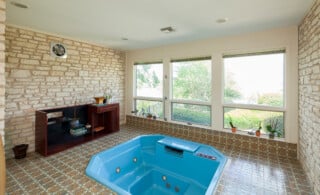
Spas may also be customized within your home. These exclusive installations may include multi-outlet shower systems, steam showers or baths, and whirlpools with circulating jets to soothe away tension.
For those who desire an indoor swim without a large pool, there are swim spas, which are larger, jetted tubs that simulate an actual swimming experience.
If you want to install your tub inside, consider adding a ventilation system to your room. The tub will increase the heat and humidity inside the room, which can cause mildew and rot. Proper ventilation fans will take away the humidity and chlorine smell.
Hot Tub Features
Hot tub and spa design has come a long way. Today’s models include lifestyle features like special lighting, stereo and speaker combinations and customized head rests, all features you’ll want to consider when choosing the right hot tub. (Remember that lights and stereos will have to be hooked up to your electrical system, too, and that electricity and water don’t mix.)
Hot Tub Maintenance
Regular hot tub maintenance can help prevent larger costs in the long run. A few maintenance tips to keep in mind:
- Consider an ozonator. An ozonator is a device that sprays ozone gas into spa water, an extremely effective way to kill off bacteria in the water, keep the water clearer longer than bromide or chlorine and not give off that chemical smell. The downside is that the ozonator has to be in operation a couple of hours every day and that you must use other chemicals as well.
- Be sure to winterize. Many unnecessary hot tub problems are caused by ineffective preparations for winter, which is why you should talk with your service professional about winterization techniques, especially if you shut the unit down in the colder months.Be very careful if you close your hot tub for winter. Any water left inside the hot tub shell, pipes or equipment, will when frozen, expand and crack your unit. A winter cover over your regular cover will help keep your unit in shape during colder temperatures.
- Check the filter. In the most-abused hot tub category is the filter, which keeps your system clear of everything from hair to bacteria. Today’s spa models include programmable filtering functions for busy people who don’t have the time to keep up with their system.
 Swimming Pool Glossary
  Pros, Cons & Costs: Fiberglass Pools
  Indoor Hot Tub: A Steamy Situation
  Quick Tips for a Summer-Ready Pool
  Get in Shape with an Endless Pool

Are You Familiar With This Topic? Share Your Experience.