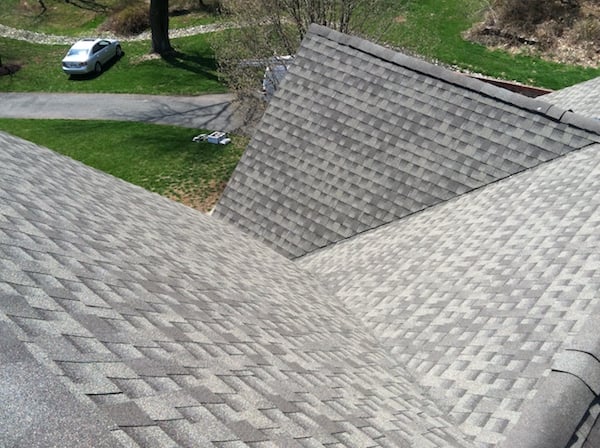
When it comes to a home’s exterior, every surface area plays an important role. The siding is like the skin, protecting us against exposure. Our windows and doors are the mouths and eyes, allowing only specific entry or exiting. But the most important surface is the one that gets the least amount of attention: our roofs. Like the tops of our heads or back of our shoulders, roofs receive lots of abuse (direct sunlight and rainfall, thermal heat loss and UV rays) unless they’re properly covered. And if you want the best protection, you may want to invest in the newest industry standard: composite roofing.
What Is a Composite Roof?
This is not the easiest answer because it can be lots of different things. Basically, as the name suggests, it’s a shingle constructed of multiple materials that are compressed and blended together. For instance, it can be a composition of fiberglass, plastic, polyester, wood, recycled paper, and other materials layered together and bonded by resins or laminates. Sometimes they’re generally referred to as asphalt shingles since they’re often covered in granulated asphalt for waterproofing and UV protection.
What Does It Look Like?
Composite roofing looks like any other roof. Except, unlike wood shingles, composite roof tiles come in long rectangles with three large notches (often called 3-tab style). These notches interlock and overlap with one another, making for easy, economical installation. However, once these flat sheets are adhered, they give the illusion of individual shake shingles. In fact, they can imitate the look of several different traditional materials. They can imitate the look of wood. They can appear as slate. They can come in different colors or shapes. Anything to create the specific style you have in mind.
Is Composite Roofing Better?
Yes, in many ways it is better. They may not have the authenticity of traditional materials, but since they’re synthetic they’re also built for durability (which is important when it comes to the top of your house). In fact, most manufacturers offer 30-50 year or lifetime warranties guaranteeing their product. Composite roofing is wind and hurricane tested and can withstand 80-100 m.p.h. gusts. They’re flame-tested, allowing them to not only impede fire but to help stop its spread as well. They hold more heat than wood shingles so that during the winter your utility bills might take a plunge. Of course, in the summer, the opposite could occur without proper ventilation or insulation, but there are light-colored options to help avoid heat absorption. There are even models specifically built with resistance to salt-air, algae, or snow buildup depending on the region.
Ready to start your composite roof?
Find ProsWhat Kind of Maintenance is Required?
Not very much. The biggest problem is often algae buildup. Exterior surfaces, especially in wet areas of the country (the coasts, Pacific Northwest, Midwest, Southeast) are prone to moss growing under or between shingles. Moss doesn’t need a root structure to grow; it just needs moisture, flowing water, and some shade, which makes the top of your house particularly vulnerable. This buildup can deteriorate shingles, obstruct proper water flow, and cause damming. To fix it, never power wash your composite roof: it’ll cause unnecessary wear and tear. Instead, call a contractor and they can apply a chemical solution on the algae. And to prevent it from happening, remove decaying elements (leaves and limbs) from the surface since it acts as food. Also, cut back your trees to avoid over-shading.
What about Repair or Replacement?
Often these roofs are guaranteed for the lifetime of a house, but make sure to inspect it occasionally. If you notice the granular texture of a shingle has smoothed, it may be time to replace a particular section. But re-roofing is easy since it can simply be laid over the original layer with no demolition required (as long as the surface is flat). And if the initial installation was properly handled by a trained professional (with correct flashings and appropriate ventilation) you shouldn’t have to worry about future problems.
 Best Asphalt Shingles – A Buyer’s Guide
  Rubber Roofing – Benefits & Alternatives
  Should You Layer Shingles on Your Roof?
 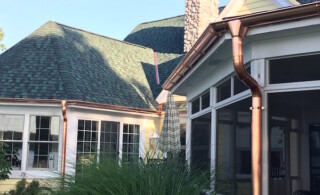 Copper Guttering: A Stylish Addition
 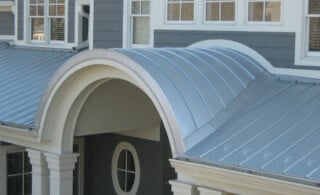 How to Keep Your Metal Roof Healthy

Does it hurt to walk on the roof to clean the leaves off several times a year?
Karlene
Karlene you should avoid walking on your roof as it can dislodge granuals that are the protective stones that are embedded in your shingle. The best thing to do would be to use a leaf blower from the gutters.