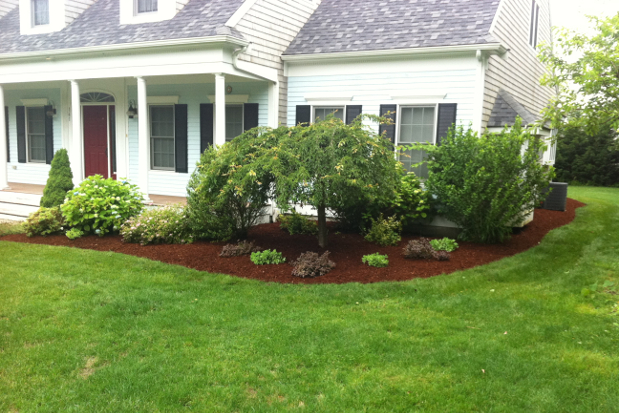
Shrubs are plants that are too short to be considered trees, usually 20′ is the cutoff. Hedges are a series of closely planted shrubs used to form a boundary or mark a specific area. Confusingly, another name for a hedge is not a shrub, but a shrubbery, which signifies a connected growth of shrubs. Bushes, on the other hand, can be single shrubs or a line of hedges, but bushes are characterized by shorter, denser growth than other tree shrubs.
As a homeowner, you don’t need to know all the confusingly synonymous terms, but you do need an understanding of the different concerns and services surrounding each. A single, stand alone shrub is more exposed to the elements than hedges, but latter requires more consistent pruning services to maintain healthy growth. And this is just one of the subtle, but important, distinctions to make when caring for all the bushes in your yard….
Tree Shrubs
So, somewhere between an oak tree and a tomato plant lays the tree shrub. The oak may require next to no maintenance in a five-year period; the tomato plant will need attention multiple times a week, or even multiple times a day. The frequency of your tree shrub service is, fittingly, in the middle of the two. Unlike that elm or maple, a tree shrub is more affected by physical damage. Many a tree has been hit by a car, and quite a few have lived to tell the tale. Shrubs, on the other hand, can be permanently damaged under much less strain. Shrub service begins before you plant. If your bush is to be placed in a high-risk area (like along a driveway), you may consider putting up a fence or other barrier to protect your plants.
Tree Shrub Service: What to Plant
Another preventative form of tree shrub service is picking the right plant for your property. Decorative tree shrubs can certainly add beauty and value to a lawn, but if they aren’t suited to your particular area, they might end up being more trouble than they are worth. Have your soil’s acidity and composition checked before you pick out your plant. The speed at which the soil drains, the percentage of clay and sand, and the soil’s pH level should all be taken into account when deciding on what your property will host. An easy way to ensure a well-growing, low-maintenance plant is to opt for native species. Native tree shrubs will be more likely to flourish and require little or no extra watering or fertilizer to thrive.
Ready to start your Shrub Pruning?
Find ProsHedges and other Bush Basics
Landscaping service for hedges is almost exclusively pruning services. You may want some advice about the placement and growth pattern. Good planting will help create an even exposure to sunlight and rainwater, but usually hedges suffer from a lack of pruning. Most homeowners like to keep clean lines for aesthetic reasons, but if you’re at least willing to go outside to prune dead or dying branches, your hedge will suffer from this “dead weight.” Once your hedges are flourishing, you should prune them at least once a year. Fortunately, it doesn’t take too much botanical knowledge, as most are well-adapted to non-selective pruning. Other varieties of shrubberies will need more attention when pruning time comes around.
Professional Pruning Practices
A “heading cut” will stimulate growth beneath the cut mark and is made anywhere on a branch that is not a point of origin or attachment; a “thinning cut” is made at a point of attachment or origin and should not encourage extra growth. Proper pruning is a combination of these two types of cuts. There is a definite science to where these cuts should be made. Having a good-looking shrub will depend on the amount of knowledge the person doing the pruning has.
Though there are certainly exceptions, shrub pruning is generally done during the early spring or late winter. This is because it is the time of year when plants are already preparing for new growth. Flowering shrubs that are meant to bloom at this time of year, however, are often pruned during early summer, after the flowers have run their course. That said, when a shrub is damaged by physical trauma (either natural or manmade), it should be pruned at once, regardless of the season. Diseased shrubs should also be pruned as soon as the ailment becomes apparent. It is a good idea to rinse the clippers you are using between cuts to hinder the spread of disease.
Tree Shrub Service Costs
Naturally, it all depends on what type of service you’re looking for, not to mention the number, size, and species of the shrubs. If you’re trying to nurse an ailing shrub back to good health, you can often get a diagnosis and a preliminary treatment for as little as $50-$150, although more extensive treatment services can run several hundred dollars. This cost range is also likely to reflect one-time consultation for shrub planting. Trimming your hedges or bushes is even less certain. Some trimming services can cost $100 or less, although most of these inexpensive jobs are usually for the elderly or people with limited mobility. More often, a homeowner will hire hedge trimming as part of a larger lawn care, landscaping, or tree trimming service. The average cost for this type of project is a more robust $800, although the range goes from a few hundred dollars to more than a thousand.
 Ornamental Trees and Plants
  Artificial Putting Greens: The Ultimate Outdoor Entertainment
  Checklist: Winter Landscape Tips
  The Myths that Lead to Common Landscaping Mistakes
  French Drains

Are You Familiar With This Topic? Share Your Experience.